Sensitive skin
Toilet Paper for Sensitive Skin: What We've Learned
 5 minreadIssue 03
If you've got sensitive skin, the simplest advice on toilet paper is also the most useful: keep it plain. NHS and dermatology guidance consistently points people with irritated skin towards soft, white, unscented toilet paper, and away from perfumed products and wet wipes. It's not the most exciting message, but it's the one the evidence backs.
We spend a lot of time on this. Our toilet paper and kitchen roll recently received the Allergy UK Allergy Friendly Product Award, and going through that process made us read far more about skin and toilet paper than we ever expected to. Here's what we've learned, with links to the original advice. One thing first: we're a toilet paper company, not doctors. If your skin is sore, itchy, or bleeding, please talk to your GP or pharmacist.
Why does toilet paper matter at all?
It's easy to forget, but the skin down there is some of the most delicate on your body, and toilet paper touches it several times a day, every day. Small things add up.
The British Association of Dermatologists notes that an itchy bottom "may be due to an allergy to something in contact with the skin, for instance to fragrance in toilet paper", and that the area "can easily be irritated by moist wipes, soaps, perfumes, antiseptics" (British Association of Dermatologists, pruritus ani leaflet).
What the NHS actually says
We were struck by how consistent the advice is. A few examples:
NHS 111 Wales advises people with an itchy bottom: "do not use perfumes or powders near your anus", and to "pat it dry using a towel or cotton wool" (NHS 111 Wales). The Northern Ireland government's health site says simply: "use soft toilet tissue" (nidirect).
For vulval skin, a patient leaflet from the Royal Wolverhampton NHS Trust lists "Use white toilet paper" as a do, and "Use coloured or scented toilet paper" as a don't (Royal Wolverhampton NHS Trust).
And it's not just about what's in the paper. It's how you use it. Guy's and St Thomas' advises: "do not wipe your bottom too much with dry toilet paper" (Guy's and St Thomas' NHS Foundation Trust). For piles, the NHS suggests you "pat (rather than rub) it dry" (NHS).
Fragrance: the one to watch
If there's one ingredient that comes up again and again, it's fragrance. Allergy UK says that "the most common ingredients in cosmetics which cause allergic reactions are fragrances and preservatives" (Allergy UK).
How common is it? The European Commission's scientific committee on consumer safety estimated that 1–3% of people in Europe have a contact allergy to fragrance ingredients, rising to around 16% among people with eczema (European Commission summary of the SCCS opinion). That's a lot of people for whom a "fresh scent" on their loo roll is the last thing they need.
A word about wet wipes
Moist toilet wipes feel gentler, so it surprised us to learn how often they come up in skin advice. The British Association of Dermatologists' vulval skincare leaflet says: "Do not use cleansing wet wipes as these may irritate vulval skin" (British Association of Dermatologists).
There's a history here, too. A preservative called methylisothiazolinone (MI) was once widely used in wet wipes and cosmetics, and dermatologists saw a wave of allergic reactions to it (Schwensen et al., Contact Dermatitis, 2017). One study described adults reacting to moist toilet tissues labelled "dermatologically tested" (Timmermans et al., Contact Dermatitis, 2007). The EU later ruled that no safe level of MI had been shown for leave-on products, wet wipes included (legislation.gov.uk, Regulation 2016/1198).
That doesn't mean every wipe is a problem today. It does show why "keep it simple" is good advice.
What we've done with ours
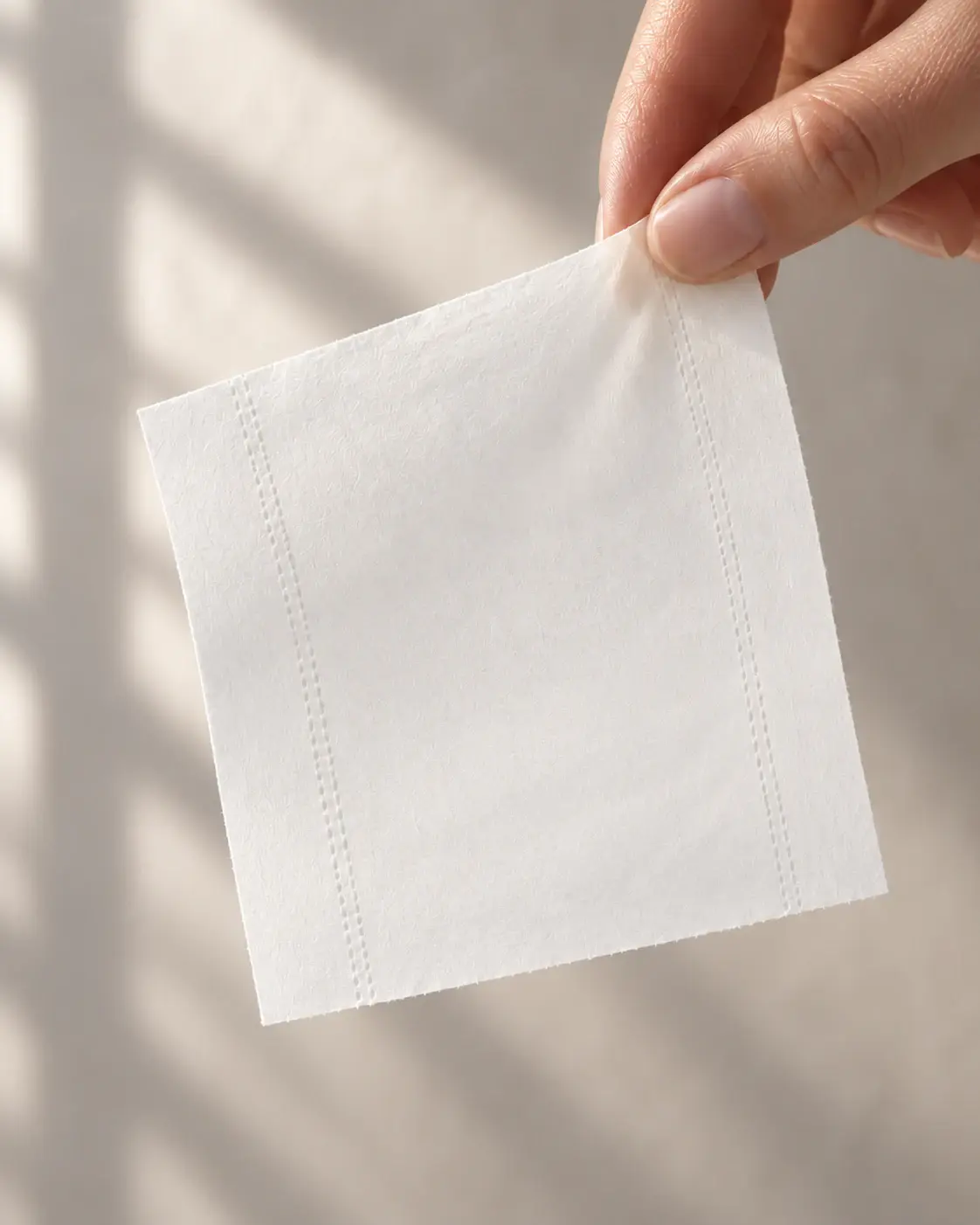
Everything above shaped how we make our paper. It's plain white, with no added fragrance and no added dyes. It's 3-ply, so it's soft without needing lotions or perfumes.
We've also had it checked by people who aren't us. Our toilet paper and kitchen roll hold the Allergy UK Allergy Friendly Product Award. They were assessed by Allergy UK's panel of advisors and allergy experts as "unlikely to cause a reaction", and Allergy UK says products like this "may be of benefit for allergy sufferers based on expert opinion". We've also had them tested by Eurofins for BPA and 32 PFAS "forever chemicals", all below the lab's quantification limit (more on that here). The reports are on our accreditations page.
We won't tell you our toilet paper will fix sore skin. No toilet paper can promise that, and if anyone does, we'd be wary. What we can promise is that we've kept it simple, had it checked independently, and published the results.
A few simple habits
Pulling the advice together, here's what comes up most often:
Choose soft, plain white toilet paper with no added scent. Pat rather than rub. Don't over-wipe. Go easy on wet wipes, perfumed soaps, and powders. And if irritation doesn't settle, see your GP or pharmacist, because there are many possible causes and most are easy to treat.
If you've found something that helps your skin, we'd love to hear about it. Drop us a line.
A few quick answers
- What toilet paper is best for sensitive skin?
- NHS and dermatology advice points to soft, plain white toilet paper with no added fragrance or dyes. Pat rather than rub, and avoid over-wiping.
- Can toilet paper cause irritation?
- It can contribute. The British Association of Dermatologists mentions fragrance in toilet paper as a possible cause of an itchy bottom. Rubbing and over-wiping can also irritate skin.
- Are wet wipes better for sensitive skin?
- Not necessarily. Dermatology advice often suggests avoiding cleansing wet wipes on sensitive areas, as they may irritate the skin.
- Is The Green Cheeks toilet paper allergy friendly?
- It holds the Allergy UK Allergy Friendly Product Award, assessed as "unlikely to cause a reaction". It has no added fragrance or dyes.